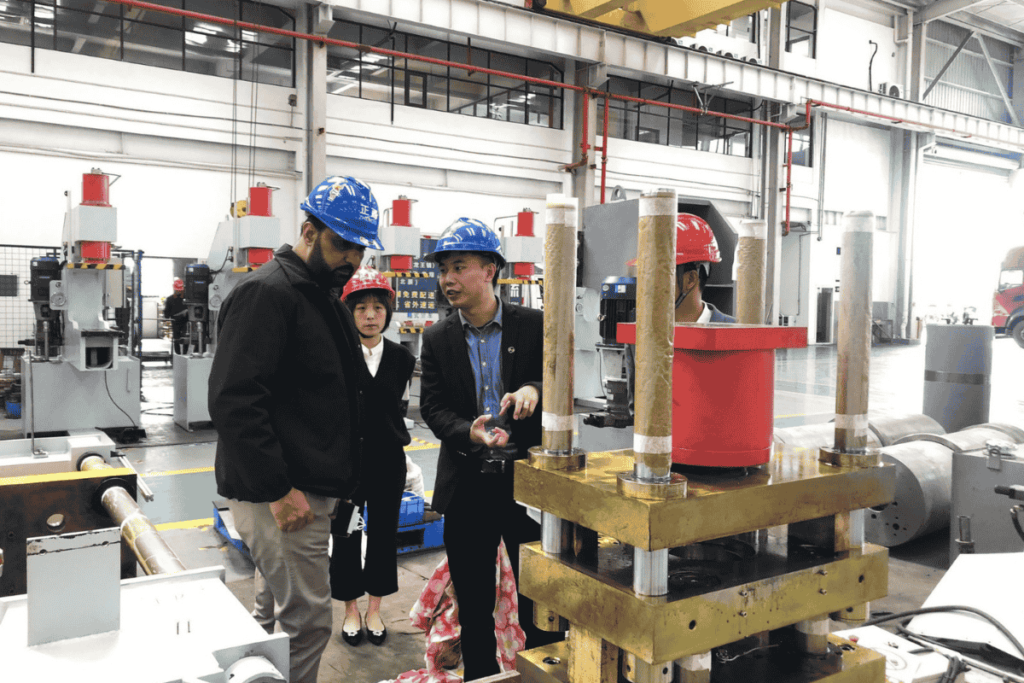
Hydraulic press refurbishing restores your press to optimal performance, extending its life and ensuring it operates efficiently for various applications. This service enhances not only functionality but also reliability and safety. During the refurbishing process, skilled technicians overhaul the press, replacing worn components and upgrading outdated technology to improve its output and ensure compliance with current standards.
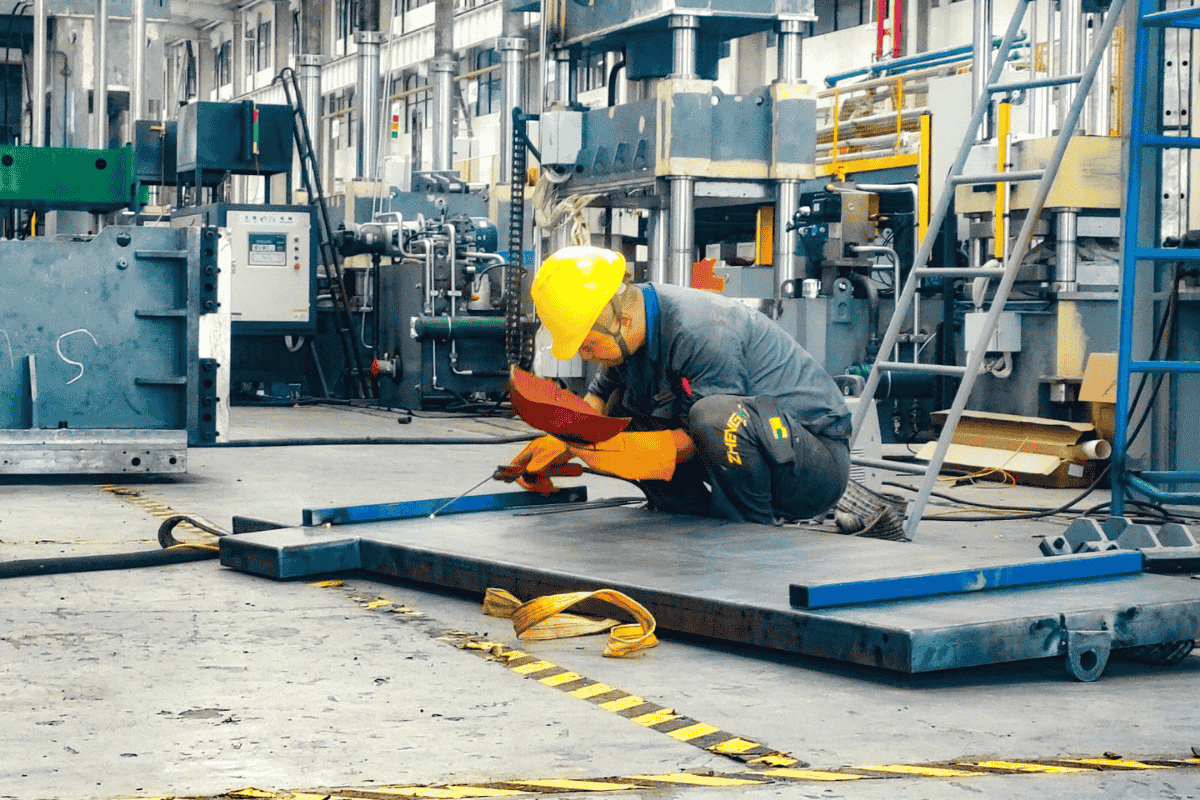
Replacement Parts: DHL custom-manufactures replacement parts, especially when OEM parts are unavailable. We specialize in designing and fabricating bolster plates, which are essential for stamping presses.
Over time, heavy usage can lead to
Resulting in hydraulic and mechanical breakdowns.
Causing performance degradation.
Due to constant vibrations and pressure.
Minimize equipment service time for smoother operations.
Repairing is often more economical than purchasing new equipment.
On-site repairs enhance operational productivity.
Rebuilding hydraulic presses saves considerable costs compared to purchasing new machines.
Reduced production downtime, with some clients reporting over 20% energy savings after rebuilds.
We customize rebuilds to fit any budget or specific need, including sourcing used equipment for refurbishment.
A hydraulic press operates using a hydraulic cylinder to generate a compressive force, which provides a high level of versatility not achievable with mechanical press designs. This type of press is a critical tool in settings where malleability and material diversity are required.
Hydraulic presses use fluid pressure to exert force upon the materials being formed. Unlike mechanical presses operating on a fixed cycle, hydraulic presses offer adjustable tonnage and pressure settings, making them slower but more adaptable to various manufacturing needs.
Here are the primary reasons to choose a hydraulic press:
Hydraulic presses offer strategic benefits that can be critical depending on the industry and specific manufacturing processes. Their flexibility in operation allows them to handle varying material types and thicknesses, which can be particularly beneficial in aerospace and automotive manufacturing, where precision and material variability are paramount.
The customizable nature of hydraulic presses means they can be adapted for tasks that aren't possible with mechanical presses. This includes intricate shaping and forming operations requiring precise force application control.
Hydraulic presses are better suited for smaller production runs where the setup and changeover times do not significantly impact overall productivity. This makes them ideal for custom manufacturing tasks or operations where versatility and precision are more critical than sheer output volume.